Facts from public sources, not quotes. Where these numbers come from
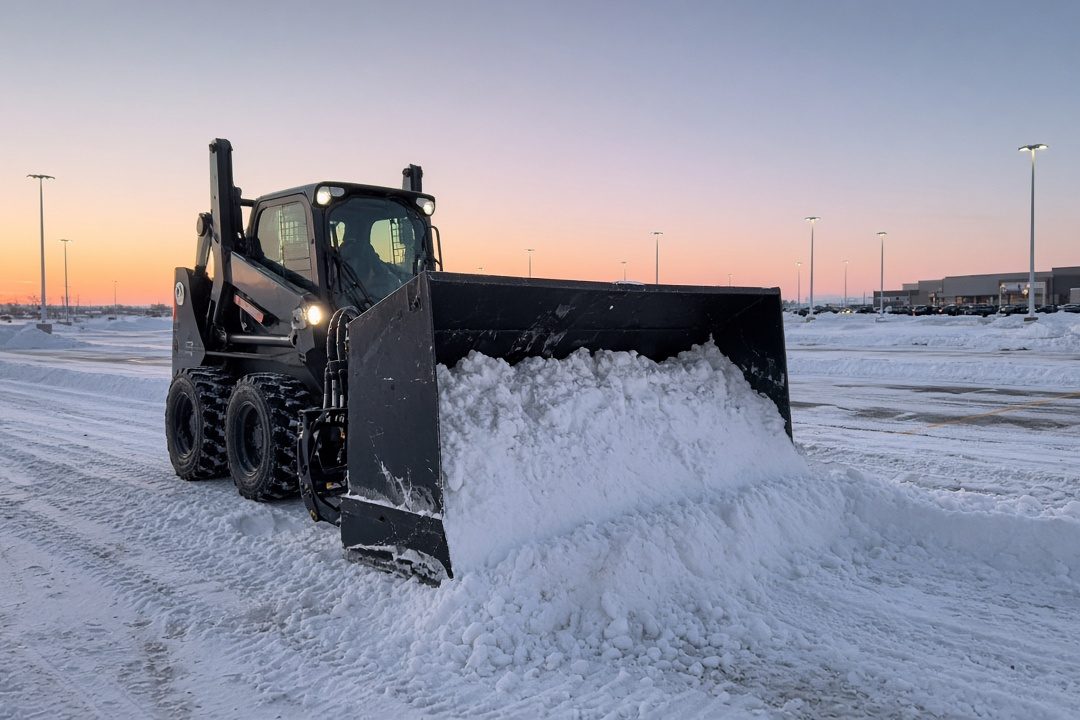
Where to check the roads and the forecast before you drive in a Front Range storm, and how Thornton plows its streets.
Get a free quote How it worksThe City of Thornton puts it plainly: Colorado's winter driving conditions can change from sunny to blowing snow in minutes. These are the official places to check, and we link every one.
| What | Where to check | Source |
|---|---|---|
| Road conditions, closures and active Traction or Chain Laws | Call 511 or visit COtrip.org | Colorado Department of Transportation (CDOT), COtrip.org |
| Forecasts, winter storm watches and warnings | National Weather Service Denver/Boulder, weather.gov/bou | National Weather Service Denver/Boulder |
| Which Thornton streets get plowed first | Primary routes, then secondary routes; residential streets only in a Class III storm | City of Thornton |
| Snow on a city street or ice in a gutter | Submit a snow removal service request through My Thornton | City of Thornton |
CDOT can put the Passenger Vehicle Traction Law or Chain Law in effect on any state highway when weather calls for it. Drivers are alerted by highway signs, COtrip.org and road condition alerts.
You need an AWD or 4WD vehicle with mud-and-snow (M+S), winter or manufacturer all-weather tires and at least 3/16-inch tread, or chains or an approved alternative traction device.
During severe storms, every vehicle must have chains or an approved alternative traction device. CDOT calls it the final safety measure before a highway closes.
Not complying costs a $100 fine plus a $33 surcharge. If it leads to a lane closure, it can be a $500 fine plus a $157 surcharge.
Source: CDOT.
Thornton has more than 1,300 miles of road within city limits. Plows clear the primary routes first, such as Colorado Boulevard, Washington Street and 104th, 120th and 136th Avenues, then secondary routes including collector streets, school zones and fire station zones. In a Class I storm, primary routes are treated within three hours of snow accumulating on the roads.
| Storm class | City definition | Residential streets |
|---|---|---|
| Class I | Less than 12 hours, under 4 inches | Not plowed |
| Class II | More than 12 hours, 4 to 8 inches | Not plowed. With a long freeze, 55 more miles of neighborhood (tertiary) routes may get one pass |
| Class III | More than 24 hours, over 9 inches | One pass down the middle, not curb to curb |
The city says it does not remove or haul away snow, and the windrows its plows leave across driveways are the resident's to clear. Plan for that before a big storm, or ask a crew to come back for it.
Source: City of Thornton.
Road conditions vary with sun, shade and surface. Watch for slick spots on bridges, overpasses and shaded areas.
Pass a plow only when you can see the road ahead, never in blowing snow, and leave extra distance because it may be spreading sand or chemicals.
Drive slower, increase your following distance, start slowly and brake gently, and begin braking early for intersections.
Keep the windows clear of snow and ice, and don't start off until the windshield is defrosted.
Ice scraper, jumper cables, a shovel, traction mats or kitty litter, blankets, food, a flashlight and a first aid kit, among the items the city recommends.
Pull as far off the road as you can, stay calm and don't overexert yourself shoveling or pushing. Turn on the flashers so you're easy to see.
Source: City of Thornton. Advisories change with each storm; always check COtrip.org and the National Weather Service before you go.